
 Home
Home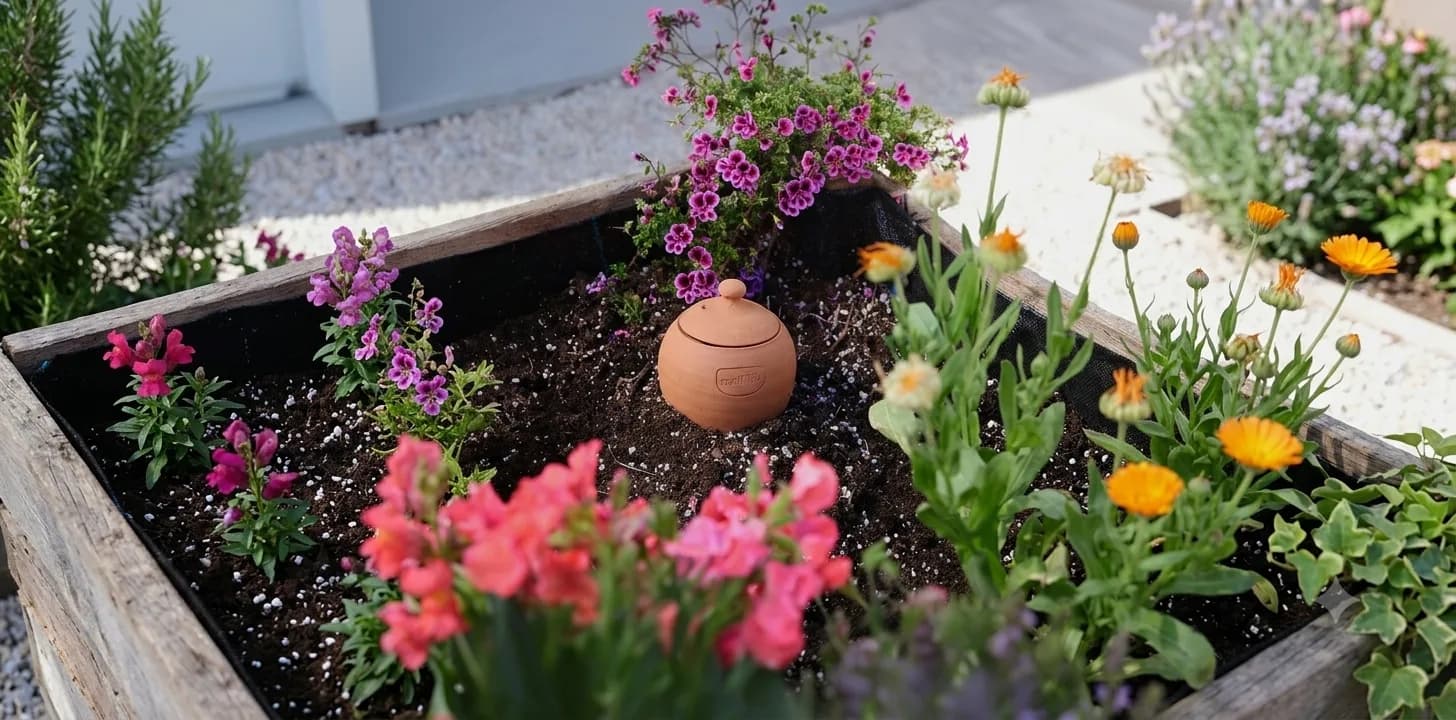
Summer strategy: how to protect your plants
13.07.2026 · 3 minThe great summer challenge: heat stress
July is one of the most demanding periods for gardening. The sharp rise in temperatures subjects plants to constant water stress. When the thermometer rises, the soil evaporation rate soars and leaves lose water faster than the roots can absorb it.
To keep a green space healthy, garden management must evolve. It is no longer enough to water indiscriminately; this month’s technical key lies in two fundamental concepts: protect and cool. Applying efficient methods that maintain moisture in the root zone and relieve the aerial part of the plant will prevent wilting and ensure optimal development.
Key care and optimisation strategies
- EFFICIENT WATERING IN THE ROOT ZONE
Watering the soil surface during hot hours is a common mistake that causes immediate loss of water through evaporation.
The best way to teach our plants to withstand summer is by supplying water directly to the subsoil, where the roots need it, maintaining a cool and constant thermal gradient.
To achieve this underground and constant dosage effortlessly, capillary systems such as the Meliflor Onland Watering Olla, are very useful, as they release moisture slowly according to the real demand of the environment.

- MOISTURE MANAGEMENT AND SUBSTRATE STRUCTURE
Extreme heat tends to crack and compact the soil, breaking its natural capillaries and causing water to run down the sides without reaching the inside.
Good soil should act as a protective sponge, maintaining a porous structure that retains moisture while allowing the roots to breathe without waterlogging.
Having a balanced technical base such as Meliflor Superior Substrate is key at this time of year, as it provides the aeration and water retention needed to prevent root stress.

- THERMAL REGULATION AND FOLIAR MICROCLIMATE
The dry summer atmosphere drastically reduces ambient humidity, causing stomatal collapse in the leaves. Creating a humid microclimate around the foliage helps lower the plant’s temperature immediately and slows excessive transpiration, which causes dry tips.
A fine spray at nightfall using practical tools such as the 2L pressure sprayer helps restore lost leaf turgor without causing runoff.

QUICK TIPS
💭 Water strictly at dawn or at nightfall.
💭 Avoid pruning and transplanting during heatwaves.
💭 Group pots together to create a shared humidity microclimate.
💭 Regularly check the autonomy of self-watering ollas.
💭 Mulch the surface with bark to reduce radiation on the substrate.
💭 Use the sprayer only once the sun has set to avoid burns.